A Sunday Table, Set for the Week Ahead
A Sunday table ritual turns one shared detail into a steady cue for the week, helping meals feel more intentional without assigning every dish.
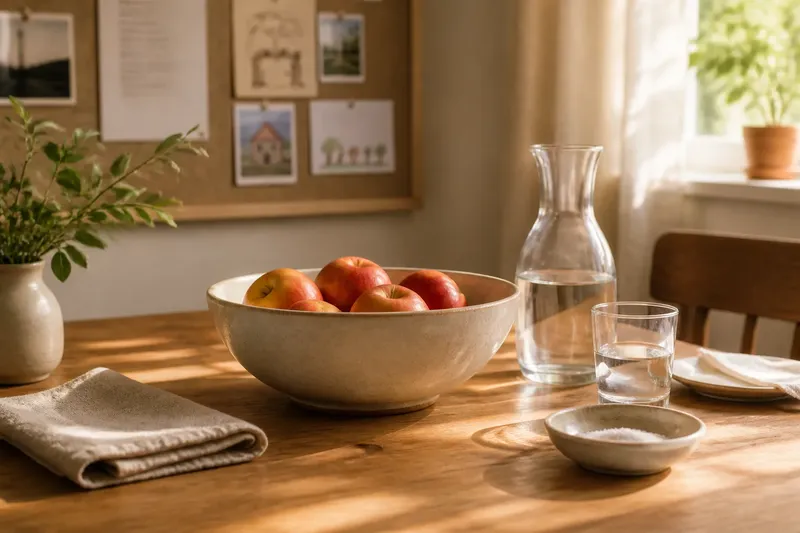
The most common mistake in a Sunday table ritual is trying to plan the whole week’s menu before deciding what the ritual is for. That can turn a quiet moment into another scheduling chore, and leave little room for the meals that happen differently than expected. A Sunday table set for the week ahead asks for something smaller: choose one shared detail that can give ordinary meals a sense of care, without scripting what goes on every plate.
Let one table detail carry the intention
A detail works best when it can appear at more than one meal and doesn’t demand elaborate upkeep. It might be a small bowl for fruit, a cloth napkin at each place, a pitcher of water, or a shallow dish for salt. The object is not a decorative theme. It is a quiet cue that says, “We meant to make room for this.”
Start with the feeling you want to invite, then choose a detail that expresses it in use. If the week feels crowded, an uncluttered table may be more helpful than a new centerpiece. If shared meals tend to happen on the fly, a serving bowl left within reach can make it easier to put something in the middle. The detail should support the way your household actually eats, not an idealized version of it.
Keep the commitment modest. You are not assigning a special meal to every night or expecting everyone to gather at a fixed hour. A single table choice can be enough to make a meal feel noticed, even if it is brief or assembled from leftovers.
A hypothetical Sunday makes the ritual concrete
Say a household has a small kitchen table, a busy week ahead, and no reliable way to know which evenings will bring everyone home at once. Their starting point is an empty tabletop that collects mail, water glasses and odds and ends. They want meals to feel a little less like a pit stop, but a menu plan would be brittle: work, errands and appetite could all change.
On Sunday, they clear the table and choose a broad ceramic bowl as the week’s shared detail. They place it in the center and decide it can hold whatever is already useful: apples, bread, or nothing at all if the table needs to stay clear. They do not buy special food or assign the bowl a nightly purpose. Its job is simply to keep one visible invitation to share something within reach.
On Monday, one person takes an apple from the bowl before heading out. On another evening, someone places bread there alongside soup. When a meal doesn’t include anything to share, the bowl remains empty, and nobody has to treat that as a failure. By the end of the week, the observable result is not a perfect run of communal dinners; it is a table that has offered a small, repeated prompt to pause and include one another when circumstances allowed.
The lesson is to choose a detail that can survive ordinary variation. A ritual tied to a particular recipe, guest count or schedule may be lovely, but it can become difficult to maintain when the week shifts. A flexible object or arrangement leaves the meaning intact while its contents change.
Choose an anchor that fits your table
Before settling on a detail, consider the table’s size, the household’s habits and what is already at hand. A centerpiece should not block conversation or make setting down plates awkward. If the table doubles as a workspace, choose something easy to move. If small children or pets share the room, a stable, unbreakable item may be more suitable than glass or a delicate arrangement.
- For a crowded table: choose a small dish or a folded cloth napkin rather than a tall arrangement.
- For meals assembled from different dishes: keep a serving platter or bowl ready to bring one shared item together.
- For a household that likes a calmer surface: leave one clear place setting with a simple glass or reusable napkin.
- For a table used for several purposes: choose a portable detail, such as a small tray, that can be moved aside without fuss.
- For an existing family tradition: bring forward a familiar salt cellar, bread basket or serving spoon instead of adding a new object.
Use what you own before shopping. A new purchase is not what makes a ritual intentional; the attention lies in selecting and using the detail. It is also not worth polishing a centerpiece, sourcing matching linens or maintaining fresh flowers solely to make the table look finished. If upkeep becomes the main event, choose something simpler.
Keep the ritual light enough to repeat
A useful Sunday ritual has a clear beginning and a natural stopping point. Clear only the part of the table that needs attention. Choose the detail, place it where it can be used, and consider what it is meant to invite. Then stop. You do not need to write a weekly intention, assign roles or add a second layer of preparation.
Let the detail change when its usefulness changes. If the fruit bowl keeps getting moved aside, perhaps a shared pitcher or napkins would fit better. If the table is already welcoming, repeating the same choice can be more meaningful than inventing a new one each Sunday. The point is not novelty; it is to make a small, deliberate choice that connects the table with the week’s real rhythms.
For a household with different preferences, the choice can be shared without turning into a committee. One person might pick the object this Sunday and another the next. Or everyone can name what would make meals feel easier, then settle on the simplest common detail. The decision should leave room for individual routines rather than making participation a test.
What should a Sunday table ritual include?
Does the detail need to be decorative?
No. A serving spoon, a pitcher or a stack of napkins can carry the intention through practical use. Choose something that belongs at the table rather than an ornament that needs attention.
Should the table be set for every meal?
Only if that suits the household. One shared detail can remain visible between meals, while place settings appear when people are ready to eat.
What if nobody eats together during the week?
The ritual can still support a meal taken at different times, such as leaving fruit or bread in a shared bowl. If a detail does not serve the household’s actual routine, choose one that does rather than treating the week as a failed attempt.
How often should the detail change?
Change it when it stops being useful or when a different choice better fits the coming week. There is no need to refresh it on a schedule; familiarity can be part of the ritual.
Let the table cue attention, not a performance
A Sunday table set for the week ahead is successful when its one chosen detail makes an ordinary meal feel a little more considered. It can hold a shared dish, clear space for conversation or simply remind someone to sit down rather than eat while standing at the counter. The meaning comes from the choice and the way it serves the people who use the table, not from how finished the room looks.
At the next Sunday reset, look at the table as it is: the useful bowl, the crowded corner, the napkin that never leaves the drawer. Pick one detail that answers a real need, put it where it can do its quiet work, and let the rest of the week remain unwritten.