The Routine That Survives a Change of Plans
A routine tied to a flexible cue can survive a shifting schedule. Learn how to choose a reliable trigger and adapt the habit without forcing a timetable.
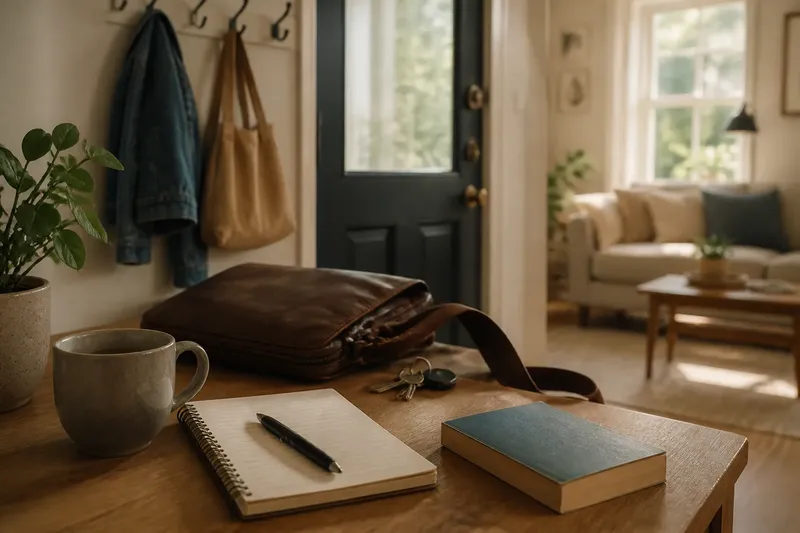
The common mistake in building a routine is assigning it a clock time and treating that appointment as the habit itself. A delayed commute, an unexpected call, or a child who needs help can knock out the appointment—and leave the habit stranded. A flexible cue gives the routine another way in: instead of “stretch at seven,” try “stretch after I put my bag down at home.”
That small change matters because days are full of events that still happen when the schedule slips. You may not eat lunch at the same time, but you probably still clear your plate. You may miss your usual reading window, but still plug in your phone before bed. Attach the habit to an event you can recognize, and it has a chance to travel with the day.
A flexible cue is an event, not a time slot
A timetable says when you intend to act. A cue says what happens just before the action. The cue might be arriving home, closing your laptop, filling the kettle, or changing out of work clothes. It gives the habit a place in the sequence of your day rather than a narrow reservation on the clock.
Not every event makes a useful cue. Choose one that is familiar, easy to notice, and likely to happen even when the day is unusual. “After breakfast” may be dependable if you eat at home most mornings; it may be a poor choice if breakfast varies or often happens on the train. “After I set my work bag by the door” could be more consistent for someone who returns home at different hours.
The best cue is not necessarily the earliest one. It is the event that offers a believable opening for the habit. If you want to jot down a few lines, linking it to shutting down your computer may work better than attaching it to a rushed morning coffee.
Build the habit into a sequence you already recognize
Think of the habit as the next small action in a chain: cue, habit, then whatever normally follows. A cue should be specific enough to picture. “After work” can mean several things; “after I put my laptop in its sleeve” marks a clearer moment. The action should also be small enough to begin without negotiating with yourself.
Say you want to read more, but meetings often push your evening later. You choose the cue “after I place my phone on its charger,” then keep a paperback on the bedside table. On a calm evening, you read for a while; on a late one, you read a page or two. The observable result is that the charger still signals a brief reading opportunity, rather than a requirement to clear a large block of time.
Keep the cue and the essential action linked, but allow the amount of effort to vary. A short version is not a separate habit or a consolation prize; it is a way to preserve the connection when circumstances tighten. If the action requires equipment or setup, put those materials where the cue naturally leads you. A notebook beside the kettle, for instance, reduces the gap between noticing the event and starting.
Give the routine a route through an ordinary week
A routine that depends on one perfect day is brittle. Sketch the week as it is likely to unfold, including the parts that shift: errands, commuting, caregiving, meals away from home, or evenings that run late. Then look for cues that occur across those variations. The goal is not to make every day identical; it is to find a familiar event that appears in more than one version of the day.
- On a usual day: Follow the cue with the full version of the habit if there is room for it.
- When the day runs late: Keep the same cue and use a compact version that still counts as the intended action.
- When you are away from home: Look for an equivalent event, such as arriving at your lodging or finishing dinner, rather than waiting for your home setup.
- When the cue itself disappears: Use a backup cue you chose in advance, such as closing your final work message instead of shutting down your laptop.
- When the day is unusually crowded: Let the routine wait for the next natural cue instead of forcing it into a time slot that has vanished.
These are options, not rules to stack on top of a busy day. If the backup route needs more thought than the habit itself, simplify it. One clear cue and one reasonable alternative are usually easier to remember than a branching plan for every possible interruption.
Choose a cue that can flex without becoming vague
There is a useful middle ground between “at six” and “whenever I get around to it.” The first can be too rigid; the second is easy to overlook. A strong cue names a visible event while leaving the clock open: after putting away lunch, once the front door is locked, or when you finish brushing your teeth.
Check whether the event really occurs on days when the timetable changes. If you commute, “after I arrive at the office” may be unreliable on a work-from-home day. You could instead use “after I open my laptop for work,” which can happen in either place. If the cue is tied to a particular room or object, decide whether a simple substitute is available when you are elsewhere.
It is not worth tracking every variation in a detailed spreadsheet or designing an elaborate set of alarms. A note on the calendar can help while you are getting used to a cue, but constant logging can turn a modest routine into another task. Pay attention to the practical question: does the event remind you to begin, or do you keep forgetting that it was supposed to?
What should you change when the routine keeps slipping?
Should the cue happen at the same time every day?
No. The useful part is the recognizable event, not the hour on the clock. A routine can begin at different times if the same cue—such as finishing lunch—still appears.
What if the cue changes from day to day?
Choose a broader event that stays recognizable across those days, or keep one backup cue for the occasions when the usual one is absent. Avoid making the cue so broad that it could mean almost anything.
How small should the short version be?
Make it small enough to fit a disrupted day while preserving the habit’s basic purpose. For a writing routine, that might mean opening the notebook and recording one thought; for a walk, it might mean stepping outside for a brief loop.
How long should I keep the same cue?
Keep it while it reliably reminds you to act and fits your real schedule. If the event rarely happens, or repeatedly arrives when action is impossible, choose a more dependable cue rather than blaming yourself for missing it.
Adjust the cue before adding more discipline
When a routine falls away, inspect the connection between the cue and the habit. Was the cue easy to miss? Did it happen while you were driving, carrying groceries, or already rushing into another task? Was the habit too large for the moment that followed? Those details point to a practical adjustment: choose a clearer event, move the materials, or make the opening action lighter.
For a week, try the revised cue without redesigning the whole routine. Notice whether you remember to start and whether the action fits the moment. If it does not, revise one part at a time. For example, someone who misses “after dinner” because dishes and cleanup take over might switch to “after I place my plate by the sink,” provided there is room for the habit then. The observable aim is a cue that leads naturally to starting, not a more ambitious schedule.
A routine built around a flexible cue is not a promise that every day will cooperate. It is a way to make the habit less dependent on a single hour behaving as planned. Choose an event that travels with your ordinary week, keep a compact version ready, and let the routine begin when the day gives you its next opening.