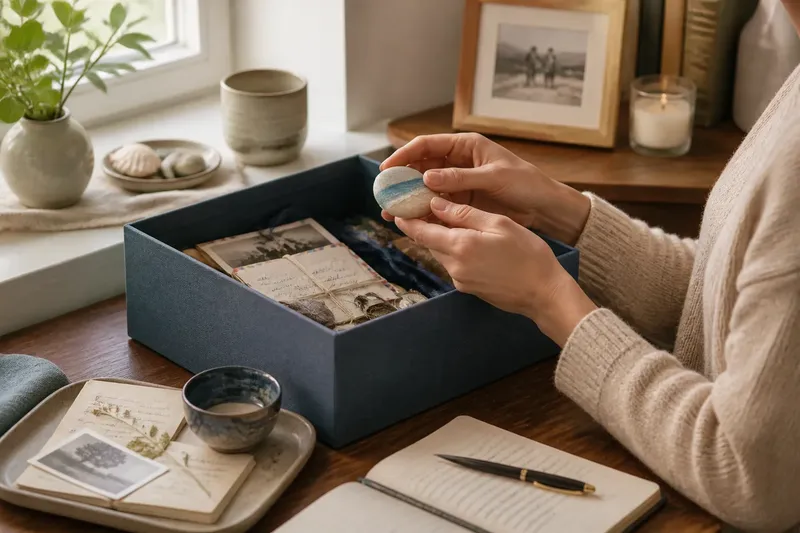
Why People Preserve Mementos for the Memories They Cue
Why people preserve mementos often comes down to memory cues: learn how ordinary objects bring back sensory details and turn fragments into personal stories.
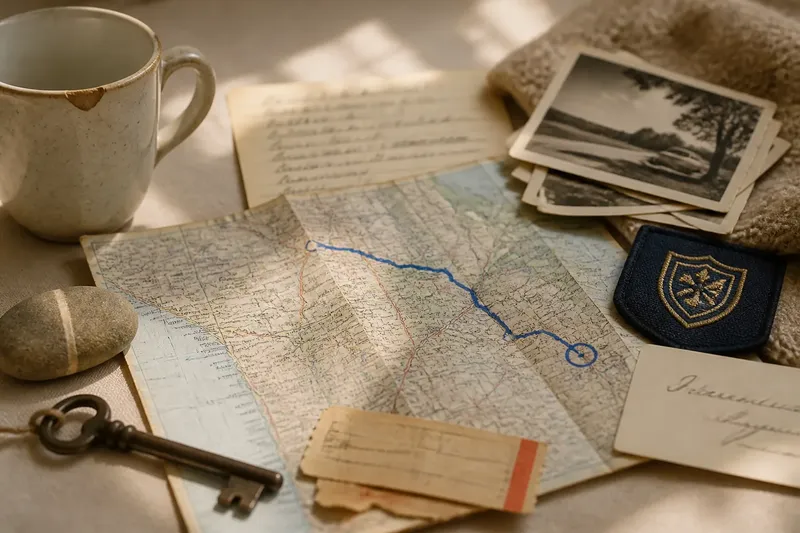
The common mistake with mementos is treating them as miniature archives: if an object survives, people assume it must preserve an accurate account. That can make a ticket stub or chipped cup seem like evidence, when its real power is more intimate and less exact. Why people preserve mementos often comes down to the way an object cues memory, bringing back a sensory detail or a scene that a plain date cannot summon.
Mementos cue details that memory alone may miss
A ticket stub cannot replay an evening, but its ragged edge may bring back the damp wool of a coat, a friend arriving late, or the hush before a performance. The object acts like a small prompt; the mind fills in a much larger scene.
Often, the recalled detail is not the event’s headline. A chipped mug might call up the strip of morning light that crossed a relative’s kitchen table. A recipe card may bring back a cook’s floury handwriting and the sound of a drawer sticking. The object helps memory land somewhere specific.
That cue is personal, not universal. One person sees a bent name tag; another remembers the nervous joke made before a first day at work. A memento’s usefulness lies less in what an outside observer can infer than in the associations its keeper can still reach.
Physical traces can stir more than a written record
A calendar entry might establish that a family gathered on a certain day. A handwritten place card could also evoke a relative’s looping script, a seating arrangement, or a running joke. Physical traces often bring sensory and emotional associations along with whatever information they literally contain.
Touch and appearance can be part of the cue. A smooth stone may recall the grit of a beach walk; an old key may bring back the cold weight of moving into a first apartment. These details do not prove that a memory is complete or perfectly accurate. They give the mind a starting point for revisiting it.
That distinction matters. A photograph shows a frame, not everything beyond its edges. A ticket shows a venue and perhaps a date, not the whole evening. Mementos invite recollection; they are not neutral witnesses to every part of the past.
Memory reshapes the story around an object
The object stays much the same while the person remembering it changes. A school badge might first recall belonging, later an uncomfortable period, and eventually a younger self still figuring things out. New experience changes which details feel prominent.
Sometimes a memento connects separate moments. A map from a family trip may first bring back the route, then a disagreement over directions, and later the relative who made everyone laugh after a wrong turn. The memory grows through repeated returns, but that does not mean every new interpretation is a definitive account.
Memory can also be selective. A familiar object may call up one bright detail and leave out the surrounding confusion. That is not a defect the memento can correct; it is a reminder to hold a remembered scene with some humility, especially when other people recall it differently.
How do mementos shape the way people remember?
Why do people keep sentimental objects?
An object can make a person, place, or feeling easier to recall than an abstract description can. Handwriting, texture, or a small mark may give that memory its particular shape.
Can a memento change what someone remembers?
It can steer attention toward certain details, such as a route on a map or a name on a ticket. It does not establish that those details are the whole story, so it helps to distinguish what the object shows from what the keeper remembers around it.
Why can the same keepsake bring up different feelings?
People encounter the past from changing circumstances, relationships, and understanding. An old object may therefore cue a different detail or emotion at a later time without making the earlier response false.
How can someone recall the story behind a memento?
Describe the specific scene or sensory detail the object brings back, then note what is directly visible and what is remembered. A short account can preserve that distinction for a future reader without claiming to capture everything that happened.
A concrete memory can be vivid without being complete
Imagine you find a folded road map with a blue line drawn across it. You recognize the route as a family trip, then remember a roadside stop where everyone disagreed about directions before laughing at the detour. You write down those starting clues—the marked route and the remembered stop—then separate them from the rest: the map confirms the line, while the argument and laughter are your recollection. The result is a vivid account that leaves room for other passengers to remember the scene differently.
This kind of care is especially useful when an object becomes part of a family story. Ask who remembers the event, what the object itself shows, and which details come from later retelling. No need to interrogate every scrap. The aim is simply to avoid mistaking a strong cue for a complete record.
Some objects prompt memory without carrying a grand story
A memento can remain ordinary. Trying to assign a profound meaning to every loose ticket or paper scrap is not worth the effort; sometimes an item was kept because it happened to be in a pocket. What matters here is not manufacturing significance, but noticing when an object genuinely brings a person or scene to mind.
Why people preserve mementos becomes clearer when they are understood as prompts rather than verdicts on the past. One may call up a smell, a voice, or a turning point, while leaving plenty outside the frame. Treat that recalled detail as a doorway into memory—not as a claim that the doorway is the whole house.